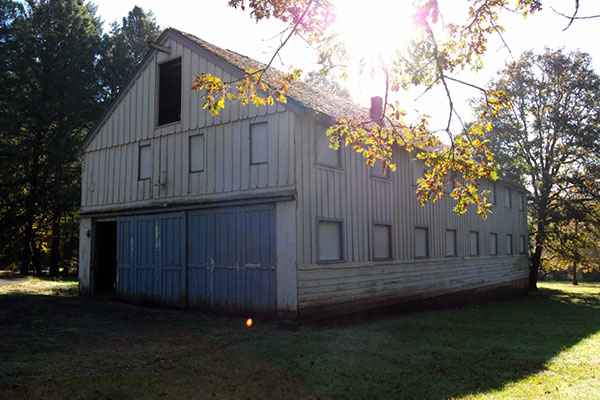
Tucked into a clearing in Peavy Arboretum, a modest wood building stands as a quiet reminder of one of the country’s most ambitious conservation efforts. The Camp Arboretum Sign Shop, built in 1936, is more than a rustic workshop. It’s one of the last remaining physical links to the Civilian Conservation Corps (CCC) in Oregon and a cornerstone of the McDonald Forest’s story.
Constructed by a CCC crew, the two-story building was the final structure completed at Camp Arboretum, a New Deal-era camp established in 1933 during the Great Depression. At the time, the CCC, created under President Franklin D. Roosevelt, employed millions of young men across the country, putting them to work on projects that would shape the nation’s forests, parks and infrastructure. In Oregon alone, 75 CCC camps operated, tackling a range of tasks from road construction to wildfire response.
Camp Arboretum played a vital role in transforming the lands that would become McDonald Forest. Operated in partnership with the U.S. Forest Service, the Oregon State Department of Forestry and what is now Oregon State University, the camp focused on reforestation, fire prevention, trail building and forest management.
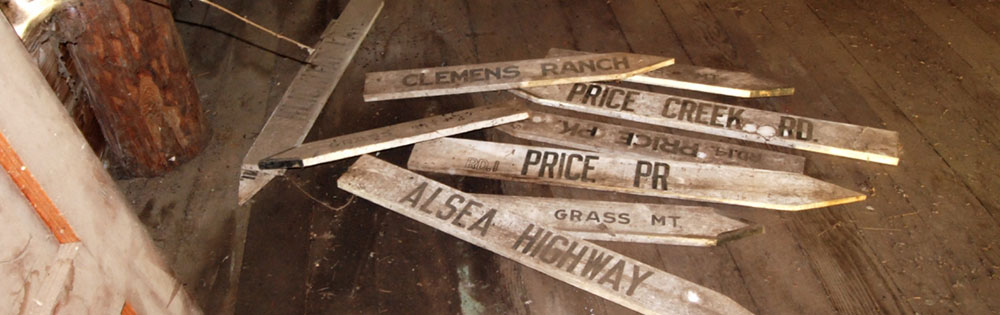
The Camp Arboretum Sign Shop itself was central to those efforts. Inside, CCC enrollees crafted hundreds of wooden signs. Logs harvested from nearby stands were milled and shaped on the first floor, then painted and lettered on the second floor before being installed under the Oregon State Forestry Department.
Architecturally, the building reflects the utilitarian ingenuity of CCC construction. Designed in the Oregon Rustic Style, it features a rectangular form, board-and-batten and shiplap siding, exposed rafter ends, and rows of paned windows. Materials were pre-cut and standardized, allowing structures to be assembled and even disassembled efficiently if camps relocated. Though many CCC buildings were temporary by design, the sign shop was part of a shift toward more permanent infrastructure, making its survival today especially rare. Its historical significance earned it a place on the National Register of Historic Places in 2008.
Today, the Camp Arboretum Sign Shop stands alongside other cultural remnants scattered throughout McDonald Forest. Together, they reflect more than a century of stewardship and offer a tangible connection to the people and practices that came before.