Clean drinking water is a vital resource that every person depends on, but it is increasingly at risk in many Pacific Northwest communities that rely on forested watersheds for their supply. After large wildfires, water quality can be threatened, and availability can shift for downstream communities for decades after the flames are out.
To address this challenge, a federally-funded, transdisciplinary research initiative led by Oregon State University’s College of Forestry is working to arm forest and water managers — and the communities they serve — with the knowledge and tools needed to strengthen watershed resilience and safeguard drinking water systems.
Professor Kevin Bladon, head of the College of Forestry’s Department of Forest Ecosystems and Society, leads this research with a clear mission: provide practical science, tools and insights that enable land managers and drinking water professionals to anticipate wildfire impacts, reduce risk and maintain safe water for their communities.
Bladon stresses that many people don’t recognize how profoundly wildfires can affect water security — or how long those effects can last. “When a fire goes through and we put it out, most news stories and most people take a deep breath and think, ‘Okay, everything’s under control,’” he said. “But from a water perspective, that’s when the problems really start.”
Researchers know that large, high-severity wildfires can alter vegetation, soils and watershed processes that regulate streamflow and water quality, increasing the risk of floods, erosion, debris flows and contaminants entering rivers that supply municipal water systems.
“The effects from fires on water are multifaceted, highly variable and different from one watershed to the next,” Bladon explained. “Because of that, it’s very difficult to predict what the effects are going to be.”
Because wildfire effects vary widely between watersheds — and can evolve for years after a burn event — researchers must draw on expertise from across fields. “Natural resource economists, drinking water treatment engineers, modelers, and empiricists may all be collecting complementary data sets. However, we may all use slightly different language or care about different aspects of those data sets. So, this work takes a lot of additional time to ensure that all 60 of those scientists are aligned and not just speaking the language of their own subfield,” Bladon explained.
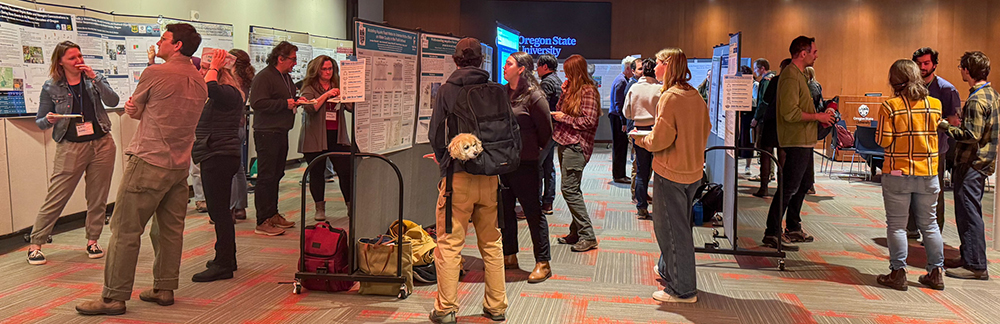
“Our project is what we call transdisciplinary,” Bladon said. “That means we’re working across disciplines and bringing together the data each of us collects. But we’re also working with external partners and inviting communities to ask, ‘What questions do you have? What are your needs?’ We’re intentionally engaging the people who will use this information — and that gives us a real advantage.”
Bladon said that while the project’s transdisciplinary approach is a major asset, it can also create challenges as team members learn to collaborate and share knowledge across different subfields.
“We’re doing the best we can to take a holistic perspective,” he said. “Having said that, this work is very hard because we all speak a different language. Socioeconomic economists, drinking water treatment engineers, and modelers and empiricists like me — all collecting data — it’s hard to bring together about 60 scientists who each speak the language of their own subfield.”
Bladon said those challenges make the team’s successes even more rewarding when they are able to come together and achieve their larger goals.
Bladon said the main takeaway from the project is the fundamental value of water.
“I think everybody has a sense of this, but I start every one of my watershed management classes by reminding students that they probably took a shower this morning or last night, and every single person in the room will drink water at some point during the day,” he said. “Our reliance on water is critical. It’s a key part of the wildfire story in the West, yet it’s often overlooked. We need to manage our forests and waterways in ways that protect this source of water. Water is so valuable. We shouldn’t ever take it for granted.”