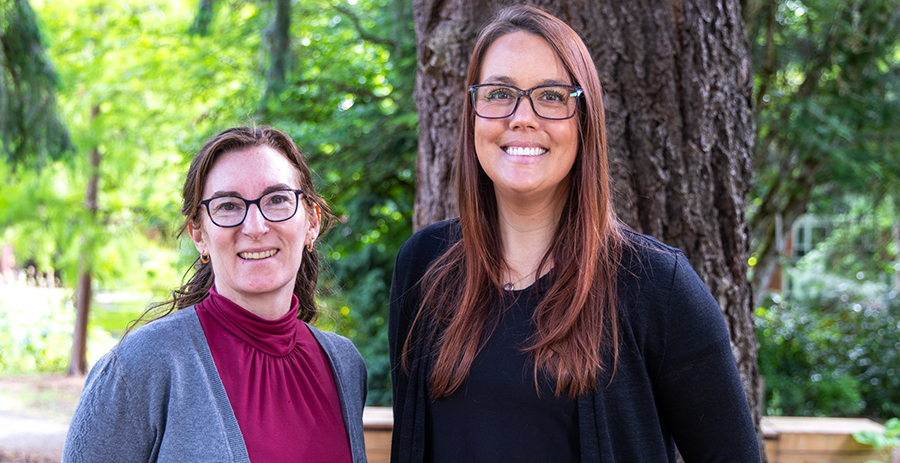
Urban forests — the trees that line our streets and shade our parks — are more than just pretty backdrops. They are vital infrastructure that supports healthier, more resilient and more equitable communities. Now, for the first time, Oregon State University’s Forestry and Natural Resources Extension program has added dedicated urban forestry Extension specialists to help communities across the state.
The two new roles were created to reflect both the urgency and opportunity in urban forestry today — and to provide professional and continuing education for urban foresters, train the next generation, and also provide landowners, municipalities and community organizations with critical knowledge in the face of new threats to urban canopies. Jennifer Killian and Sarah Low, associate professors of practice, stepped into their roles in spring 2025, which will equally blend academic teaching and community-focused outreach.
“These roles are an important evolution in our program offerings,” said Holly Ober, associate dean for science outreach and program leader for the Forestry and Natural Resources Extension program. “We’re seeing increased demand for support in urban and urbanizing areas, where trees are critical to quality of life. Jennifer and Sarah bring experience and passion to help communities build strong, sustainable urban forests.”
Urban forestry is about more than just preserving trees — it’s about planning, managing and making informed decisions that support the landscapes and green infrastructure that make cities livable. Urban trees improve air quality, help manage stormwater, cool neighborhoods, provide wildlife habitat and more. With increasing pressures from development, climate change and invasive pests, communities need timely guidance. That’s where Killian and Low come in — providing resources, workshops and on-the-ground support as OSU’s first-ever urban forestry specialists.
“We’re currently reflecting on the unique urban forestry needs of Oregon’s communities and asking how we can help address and meet those needs through our Extension work,” Low said.
Their efforts include developing educational materials, leading workshops on small-tree structural pruning and helping communities preserve trees during development. They’re also contributing to statewide efforts to prepare for emerald ash borer — an invasive beetle that threatens ash species. For both specialists, urban forestry is as much about people as it is about trees. Most people live in cities and may not have direct access to large forests or wilderness areas. The trees they interact with daily on streets and in parks shape their relationship with nature.
“Working to improve the health of trees in communities while building community around trees allows me to contribute positively to something bigger than myself,” Low said.
The work can be hard and, at times, thankless, Killian noted. One of the most misunderstood aspects of urban forestry is the balance between preserving trees and making informed decisions that promote long-term canopy health, safety and equity.
“People are, rightfully, passionate about the trees in their community, and navigating those emotions with care while advocating for trees as a shared resource is not always easy,” Killian said. “But making sure people have a safe, reliable connection to trees and nature where they live is what keeps me going.” Urban forestry is at a pivotal moment — facing significant challenges from increased development pressure, emerging pests such as emerald ash borer, climate change and the need for equitable access to green spaces.
“But at the same time, I’ve never seen so much energy and passion for this work, which gives me a lot of hope,” Killian said. “We have an opportunity right now to shape more equitable, resilient urban forests, and I feel incredibly grateful to be a part of that work, especially here at Oregon State.”
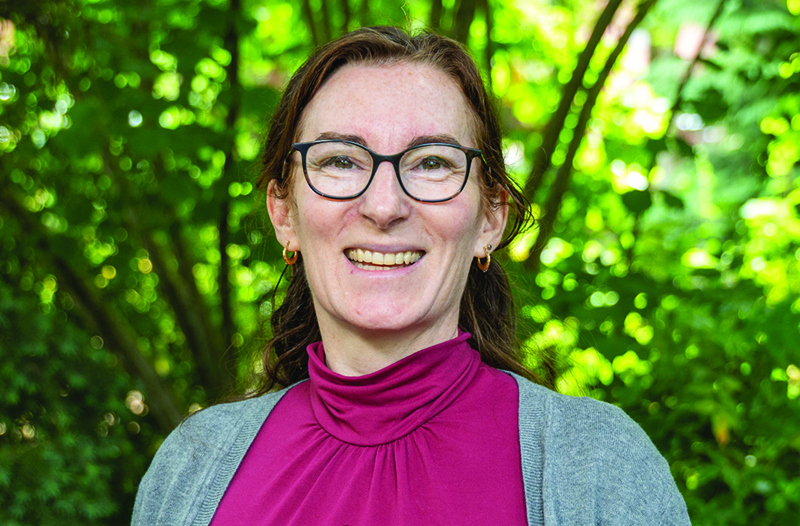
SARAH LOW
Growing up as a city kid in Washington, D.C., Low was always comfortable working in natural spaces and urban places. After earning her master’s degree from the University of Massachusetts Amherst, she has focused her career on addressing challenges in urban forestry and urban ecology from coast to coast.
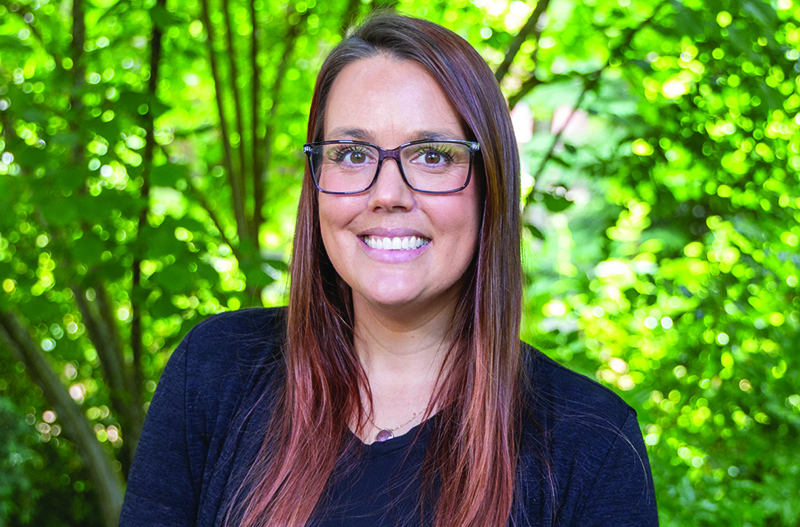
JENNIFER KILLIAN
Originally from south-central Wisconsin, Killian first developed an interest in municipal forestry through work at the Wisconsin Department of Agriculture. She earned a master’s degree from Oregon State and, after gaining experience across nonprofit, municipal and state sectors, is excited to return to the university.