The Forest Ecosystems and Society graduate program empowers you to become an interdisciplinary thinker, a skilled scientist and a forward-looking natural resource leader. With flexibility at its core, the program requires only three courses — FES 520 Posing Researchable Questions, FES 525 Interdisciplinary Collaborative Problem Solving, and FES 526 Effective Communication and Presentation Skills for Scientists. Beyond these, you’ll work closely with faculty mentors to design a customized plan of study and a capstone (M.F.), thesis (M.S.) or dissertation (Ph.D.) project that reflects your passions and career goals.
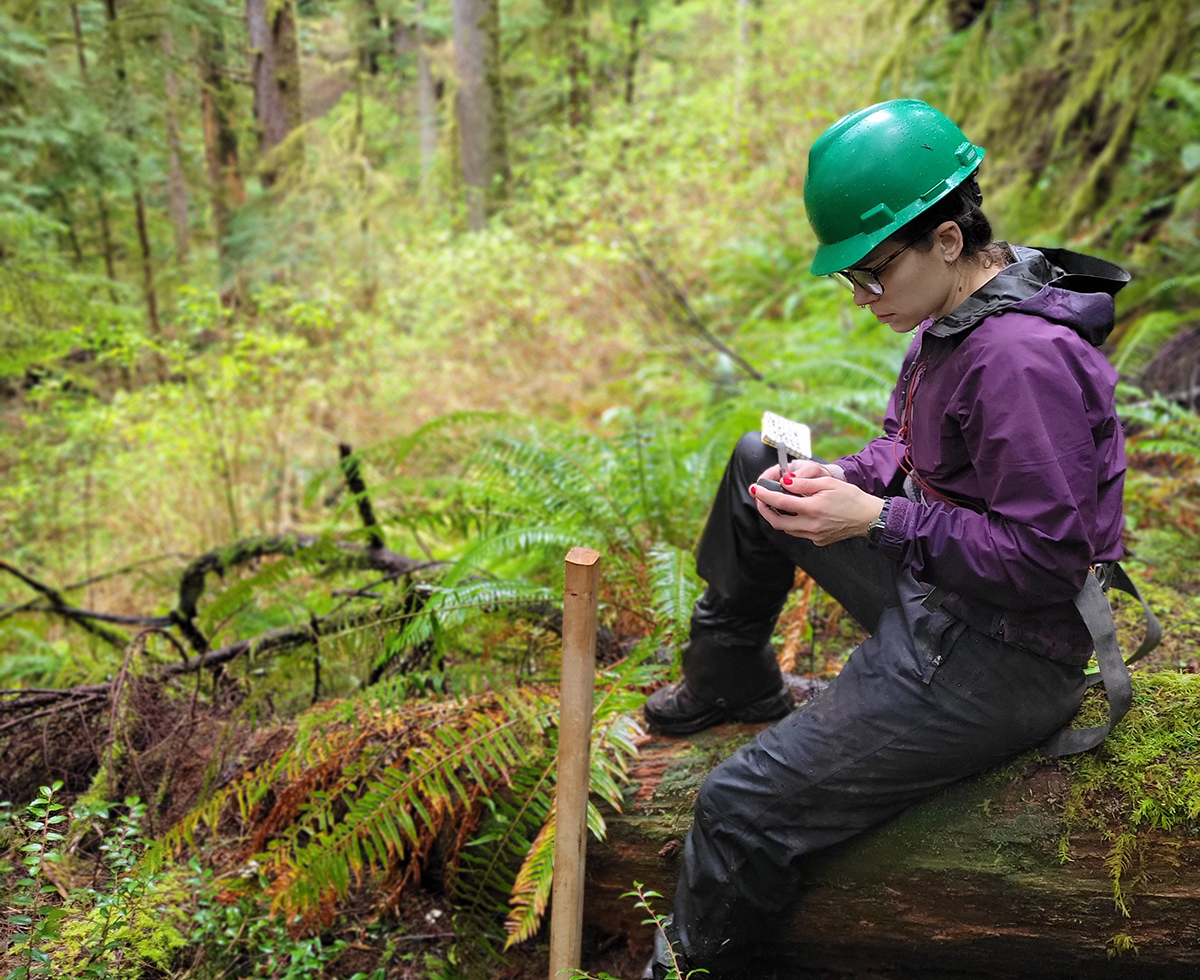
This innovative approach allows students to focus on the skills and knowledge most relevant to their interests while benefiting from the College of Forestry's collaborative ties with multiple environment and governmental agencies, as well as access to world-class living laboratories across more than 27,000 acres, including the OSU Research Forests, the H.J. Andrews Experimental Forest, and diverse public and private landscapes.
Students in this program gain the tools to address today’s most pressing socioecological challenges in research, teaching, policy, outreach, and resource management. This program is offered through our Department of Forest Ecosystems and Society (FES).
College of Forestry faculty mentors are world leaders in a wide variety of disciplines, including:
Restoration Ecology | Forest Ecology | Social Science/Human Dimensions of Natural Resources | Genetics and Tree Improvement | Silviculture | Climate Change and Carbon Dynamics | Tree Physiology | Natural Resource Economics and Policy | Urban Forestry | Wildlife Biology | Nature-based Tourism and Ecotourism
The College of Forestry offers three graduate-level degrees in Forest Ecosystems and Society: